⌕
ELECTRIC CARS · BUYING GUIDE
Electric Cars in the U.S.: Complete EV Buying and Ownership Guide
A practical guide to buying and owning an electric vehicle in the United States, including charging, batteries, insurance, financing, maintenance, used EVs and ownership costs.
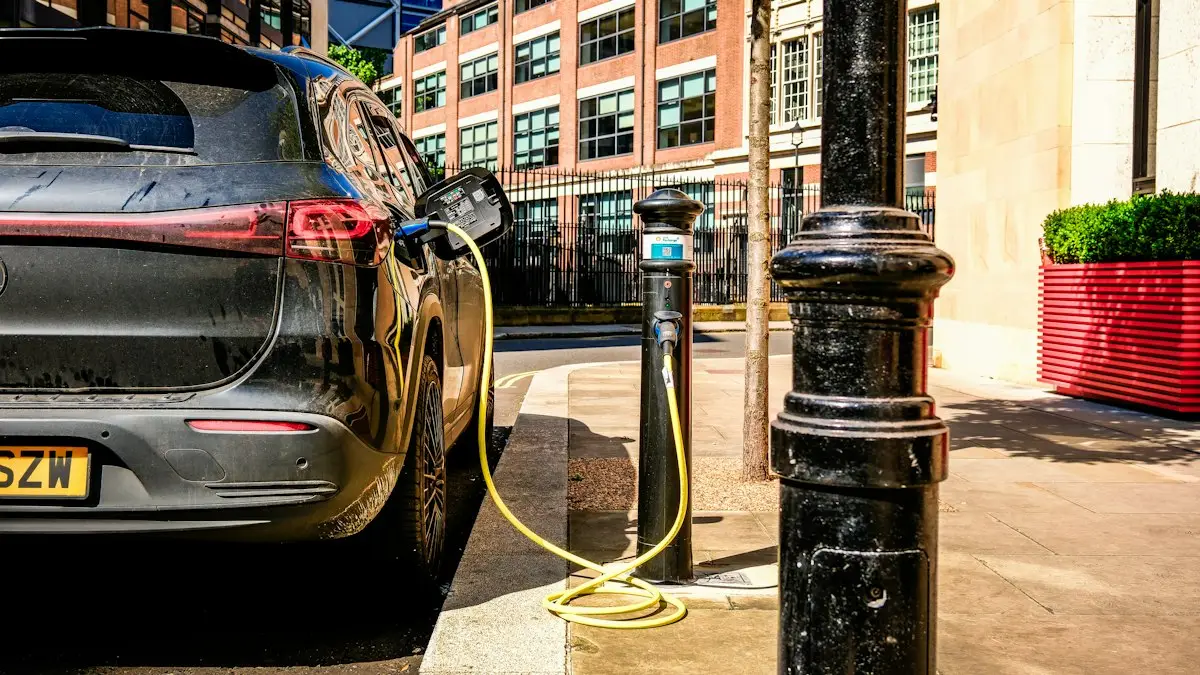
Buying an electric vehicle in the United States involves more than choosing a model and comparing driving range.
Before you buy, there are several practical questions worth answering.
Can you charge at home? How much will charging cost where you live? What happens to the battery as the vehicle ages? Will the EV cost more to insure? Should you buy new or used? How should you finance it? And are federal EV tax credits still available?
The answers depend on the vehicle, where you live, and how you plan to use it.
That is why the best way to evaluate an EV is to look beyond its purchase price and understand the total cost and practical realities of owning an electric vehicle in the U.S.
This guide covers the major factors you should consider before buying.
What Exactly Is an Electric Vehicle?
The term “electric car” can refer to several types of electrified vehicles, but there are important differences between them.
Battery Electric Vehicle (BEV)
A Battery Electric Vehicle, or BEV, runs entirely on electricity.
It uses a large battery pack to store energy and one or more electric motors to move the vehicle. There is no gasoline engine.
The battery is recharged by connecting the vehicle to an external electricity source.
Plug-In Hybrid Electric Vehicle (PHEV)
A Plug-In Hybrid Electric Vehicle, or PHEV, combines:
- a battery;
- an electric motor;
- an internal-combustion engine;
- a gasoline tank.
A PHEV can travel a certain distance using electricity before relying on gasoline.
Hybrid Electric Vehicle (HEV)
A traditional hybrid also combines an electric motor and an internal-combustion engine, but it is not plugged into an external charger in the same way as a BEV or PHEV.
The EPA distinguishes battery-electric vehicles from plug-in hybrids because BEVs rely on electricity stored in their batteries for propulsion, while PHEVs use both electricity and gasoline.
Understanding the difference matters when comparing charging, maintenance, fuel costs, range, and overall ownership expenses.
Is an Electric Car Worth It in the U.S.?
There is no single answer that applies to every driver.
For some households, an EV can fit extremely well into everyday life. For others, a hybrid or gasoline vehicle may still be more practical.
The decision depends less on whether EV technology is generally “better” and more on how you actually use your vehicle.
Before buying, consider:
- how many miles you drive each day;
- whether you can charge at home;
- local electricity rates;
- public charging availability;
- the vehicle's real-world range;
- your local climate;
- purchase price;
- insurance costs;
- financing;
- battery warranty;
- maintenance;
- state registration fees;
- expected resale value.
Range can also change depending on driving conditions.
The EPA notes that factors including cold temperatures, air-conditioning use, and high-speed driving can affect an electric vehicle's real-world range.
That means comparing EPA range estimates is useful, but it should not be the only factor in your buying decision.
How Much Does It Really Cost to Own an Electric Car?
One of the biggest mistakes when comparing an EV with another vehicle is looking only at the purchase price.
The true cost of ownership includes much more.
Purchase Price
Compare the actual transaction cost of the vehicle rather than focusing exclusively on its advertised MSRP.
Financing
If you finance the purchase, the APR, loan term, down payment, fees, and total cost of borrowing all matter.
A lower monthly payment does not necessarily mean a less expensive loan.
Electricity
Your charging cost will depend on:
- the vehicle's efficiency;
- how many miles you drive;
- local electricity rates;
- where and when you charge.
Home Charging
Some drivers can use existing electrical infrastructure.
Others may want or need Level 2 charging equipment and potentially additional electrical work.
Insurance
Premiums can vary according to the driver, ZIP code, vehicle, insurer, coverage limits, deductibles, and other factors.
Registration and Taxes
Fees and tax treatment vary by state.
Some states also impose EV-specific registration fees.
Maintenance
A battery-electric vehicle eliminates several maintenance items associated with an internal-combustion engine, but it still has tires, brakes, suspension, climate-control systems, and other components that require attention.
Battery
The battery is designed for long-term use, but warranty terms, degradation, and potential out-of-warranty repair costs should still be understood before buying.
Depreciation
Consider what the vehicle may be worth when you eventually sell or trade it.
That is why comparing:
“a $X EV versus a $Y gas car”
doesn't tell the entire story.
A more useful question is:
How much will it cost me to buy, finance, insure, charge, maintain, register, and eventually sell this vehicle during the years I plan to own it?
VoltClever will explore this separately in our complete guide to the true cost of owning an electric car.
How Do You Charge an Electric Car?
Your charging situation can dramatically affect the EV ownership experience.
In the U.S., charging is generally divided into three major levels.
Level 1 Charging
Level 1 uses 120-volt AC power, similar to a standard household outlet.
It is the slowest charging option.
The U.S. Department of Energy's Alternative Fuels Data Center (AFDC) lists roughly 2 to 5 miles of range added per hour, depending on the vehicle and conditions.
For drivers with relatively short daily commutes and enough overnight charging time, Level 1 may be sufficient.
Level 2 Charging
Residential Level 2 charging typically uses 240-volt power and can charge an EV significantly faster.
AFDC lists roughly 10 to 30 miles of range added per hour as a general reference, although actual charging speed depends on the vehicle, charger, available power, battery, and other factors.
Installing Level 2 equipment may require professional electrical work depending on the property.
DC Fast Charging
DC fast charging is primarily used at public charging stations and highway corridors when drivers need to add substantial range more quickly.
Charging speed varies considerably depending on:
- the vehicle;
- charging station;
- battery temperature;
- battery state of charge;
- maximum charging capability.
Charging time varies considerably by vehicle, charging equipment, battery temperature, and state of charge.
So instead of asking:
“How long does an EV take to charge?”
a better question is:
How long will this particular EV take to charge using the charger I expect to use most often?
Do You Need a Home EV Charger?
Not necessarily.
The Department of Energy explains that many EV owners charge overnight using Level 1 or Level 2 equipment.
For some drivers, Level 1 charging may provide enough energy for normal daily driving if a suitable outlet and electrical circuit are available near the parking location.
Before buying an EV, ask:
- Do I have a garage or dedicated parking space?
- Is there an appropriate electrical outlet nearby?
- Is the electrical system suitable for EV charging?
- Would I benefit from Level 2 charging?
- Do I live in an apartment or condominium?
- Does the property allow charger installation?
- Would electrical upgrades be necessary?
- Does my utility offer time-of-use or EV charging rates?
A homeowner with dedicated parking may have a very different ownership experience from someone who relies entirely on public charging.
For that reason, figure out your charging plan before buying the EV, not afterward.
What Should You Know About EV Batteries?
The battery is one of the biggest concerns for many first-time EV buyers.
That makes sense. It is one of the vehicle's most important and expensive components.
But it helps to separate three different issues.
Battery Life
EV batteries are designed for long-term use.
The Department of Energy's AFDC notes that many manufacturers offer battery warranties around 8 years or 100,000 miles.
However, that does not mean every manufacturer, vehicle, model year, or battery warranty has identical terms.
Always check the warranty for the exact vehicle you are considering.
Battery Degradation
An EV battery does not necessarily go from “working normally” to suddenly “dead.”
Over time, it can gradually lose some usable capacity.
Battery longevity can be influenced by factors such as:
- climate;
- battery chemistry;
- vehicle design;
- charging behavior;
- driving habits;
- thermal management.
That makes battery health particularly important when shopping for a used EV.
Battery Replacement
Replacing an EV battery outside warranty can be expensive.
However, buyers should not automatically assume that every EV will require a complete battery replacement during their ownership period.
Before buying—especially used—check:
- battery health;
- current usable range;
- remaining battery warranty;
- warranty conditions;
- vehicle history;
- open recalls.
VoltClever will cover these topics separately in our guides to EV battery life, EV battery replacement costs, and EV battery warranties.
What Maintenance Does an Electric Car Need?
An electric vehicle does not mean a maintenance-free vehicle.
However, BEVs eliminate several routine maintenance items associated with internal-combustion engines.
According to the Department of Energy, all-electric vehicles typically require less maintenance because they have fewer moving parts, fewer fluids requiring regular service, and regenerative braking can reduce brake wear.
For example, a BEV does not need engine oil changes.
But EVs still have components that require maintenance or replacement.
These can include:
- tires;
- brakes;
- suspension;
- steering;
- filters;
- climate-control systems;
- brake fluid;
- cooling systems where applicable;
- windshield wipers;
- electronic components.
Tires deserve particular attention.
Vehicle weight, power, driving style, alignment, tire design, and road conditions can all affect tire wear.
So when comparing an EV with a gasoline vehicle, don't ask only:
“Which one requires less maintenance?”
Instead ask:
What maintenance will each vehicle require during the years I expect to own it, and what might that maintenance cost?
Is Electric Car Insurance More Expensive?
Electric vehicles require auto insurance just like other vehicles.
What can differ is the premium.
The National Association of Insurance Commissioners (NAIC) identifies several factors that can affect EV insurance costs, including:
- vehicle value;
- repair complexity;
- battery repair or replacement;
- parts availability;
- availability of repair facilities with EV expertise.
That does not mean every EV will cost more to insure for every driver.
Insurance premiums can depend on:
- state;
- ZIP code;
- driver age;
- driving history;
- vehicle model;
- vehicle value;
- coverage;
- deductible;
- insurer.
One of the smartest steps you can take before buying an EV is simple:
Get insurance quotes for the exact vehicle you're considering before you purchase it.
Don't wait until after you've signed the paperwork.
VoltClever will cover this topic in depth in our Electric Car Insurance Guide.
How Can You Finance an Electric Car?
Financing an EV generally works like financing other vehicles.
Options may include:
- dealer-arranged financing;
- banks;
- credit unions;
- other auto lenders;
- manufacturer financing programs;
- leasing, when available.
The Consumer Financial Protection Bureau (CFPB) recommends comparing financing offers before choosing a loan and notes that buyers are not required to accept financing arranged by the dealership.
This matters because a lower monthly payment does not necessarily mean a cheaper loan.
Compare:
- vehicle price;
- down payment;
- APR;
- loan term;
- monthly payment;
- fees;
- total amount paid.
The CFPB also notes that advertised auto loan rates are generally estimates and that an accurate offer depends on the borrower's financial circumstances.
For that reason, VoltClever will not treat an advertised interest rate as a rate every buyer can receive.
Should You Buy a New or Used Electric Car?
Used EVs can provide an attractive entry point into electric vehicle ownership, but they require a slightly different inspection process.
When considering a used EV, pay particular attention to the following.
Battery Health
Don't look only at the odometer.
Battery health can affect usable range and the vehicle's value.
Current Range
Compare the vehicle's current usable range with the driving you actually need to do.
Remaining Warranty
Confirm:
- time remaining;
- mileage limit;
- original warranty start date;
- transferability;
- covered failures or degradation;
- exclusions.
Vehicle History
Review accident, repair, and service history when available.
Open Recalls
The National Highway Traffic Safety Administration (NHTSA) allows consumers to search a vehicle's VIN for open safety recalls that have not been repaired.
Charging Compatibility
Check the vehicle's charging connector and whether it works conveniently with the home and public charging options you plan to use.
Total Cost
A cheaper used EV is not automatically a better deal if its battery is significantly degraded, its usable range no longer meets your needs, or its battery warranty is about to expire.
VoltClever will cover this in more detail in our Used EV Buying Guide and How to Check Used EV Battery Health guide.
Is There Still a Federal EV Tax Credit in 2026?
This is one area where outdated information online can cause significant confusion.
If you're buying an EV now, do not assume that the previous federal clean vehicle purchase credits are still available.
The IRS states that the New Clean Vehicle Credit and Previously-Owned Clean Vehicle Credit are not available for vehicles acquired after September 30, 2025.
That means many older articles describing federal purchase credits may no longer apply to a new vehicle purchase in 2026.
However, that does not necessarily mean every EV-related incentive has disappeared.
Depending on where you live, there may still be:
- state incentives;
- local programs;
- utility rebates;
- charging-related incentives;
- other programs.
The Alternative Fuels Data Center maintains information about federal and state laws and incentives.
Because these programs can change, always verify eligibility and current terms directly with the relevant government agency or utility before making a purchase decision.
Never buy an EV assuming you will receive an incentive that you have not independently verified.
Why Your State Matters
Owning an EV in California can be a very different experience from owning one in Texas, Florida, New York, Colorado, or another state.
Several factors can change by location:
- electricity prices;
- insurance;
- taxes;
- vehicle registration;
- EV-specific fees;
- incentives;
- climate;
- public charging infrastructure;
- utility programs.
The Alternative Fuels Data Center maintains state-specific information because EV laws, incentives, infrastructure, and policies are not uniform across the United States.
VoltClever will therefore avoid presenting a state-specific rule as if it applied nationwide.
EV Buying Checklist: What to Check Before You Buy
Before signing a purchase or lease agreement, answer these questions.
Driving
- ☐ How many miles do I normally drive each day?
- ☐ How often do I take long trips?
- ☐ How much real-world range do I actually need?
Charging
- ☐ Can I charge at home?
- ☐ Is a suitable 120-volt outlet available?
- ☐ Would Level 2 charging make sense for me?
- ☐ Can my electrical system support it?
- ☐ What will charging look like if I live in an apartment or condo?
- ☐ What public charging options exist near my home and along my normal routes?
Costs
- ☐ What is the actual purchase price?
- ☐ What might I spend on electricity?
- ☐ What will insurance cost for this exact model?
- ☐ Does my state charge additional EV registration fees?
- ☐ Will I need to install charging equipment?
- ☐ What maintenance should I expect?
Battery
- ☐ How long is the battery warranty?
- ☐ What mileage does it cover?
- ☐ Does it transfer to a second owner?
- ☐ What is the battery's current condition if I'm buying used?
Financing
- ☐ What is the APR?
- ☐ What is my down payment?
- ☐ What is the monthly payment?
- ☐ What is the total amount I will pay?
- ☐ Have I compared dealer, bank, and credit union financing?
Used EV
- ☐ Have I checked battery health?
- ☐ Have I reviewed vehicle history?
- ☐ Have I checked the VIN for open recalls?
- ☐ Have I confirmed the remaining battery warranty?
Incentives
- ☐ Have I checked current state programs?
- ☐ Have I checked my utility's programs?
- ☐ Have I verified eligibility using an official source?
If you cannot answer several of these questions yet, you probably need more information before choosing a vehicle.
So, Is an Electric Car Worth Buying?
An EV can make sense when it fits your driving habits, budget, charging situation, and local conditions.
But the decision shouldn't be based only on gasoline savings or maximum range.
Look at the entire ownership picture:
purchase price + financing + electricity + charging + insurance + battery + maintenance + registration + depreciation.
Most importantly, consider how you actually use your vehicle.
Someone who can charge overnight at home and has a predictable daily commute may have a very different experience from someone who lives in an apartment, drives long distances frequently, and depends entirely on public charging.
The best EV is not necessarily the cheapest model, the one with the longest range, or the most popular one.
It's the vehicle whose total cost and everyday usability make sense for your situation.
Frequently Asked Questions About Electric Cars
Can you charge an electric car using a regular outlet?
Yes. Many EVs can use Level 1 charging from a suitable 120-volt household outlet. It is much slower than Level 2 charging, and the electrical circuit must be appropriate for EV charging.
Do I need a Level 2 charger at home?
Not necessarily. It depends on how many miles you drive, how long the vehicle remains parked, and how quickly you need to recharge. Level 1 may be enough for some drivers, while Level 2 can be much more practical for others.
Do electric cars need maintenance?
Yes. BEVs generally require less powertrain maintenance than gasoline vehicles, but tires, brakes, suspension, filters, climate-control systems, and other components still require inspection and maintenance.
How long do EV batteries last?
There is no single lifespan that applies to every electric vehicle. Battery longevity depends on battery chemistry, vehicle design, climate, use, charging habits, and other factors. Many manufacturers offer warranties around 8 years or 100,000 miles, but the exact warranty should always be checked for the specific vehicle.
Are electric cars more expensive to insure?
They can be in some situations, but there is no universal rule. The driver, location, model, repair costs, coverage, deductible, and insurer can all affect the premium.
Can you finance an electric car?
Yes. Financing may be available through dealerships, banks, credit unions, manufacturers, and other lenders. Compare APR, loan term, fees, monthly payment, and total cost instead of focusing only on the monthly payment.
Is there a federal tax credit for buying an EV in 2026?
The IRS states that the New Clean Vehicle Credit and Previously-Owned Clean Vehicle Credit are not available for vehicles acquired after September 30, 2025. State, local, utility, or other programs may still exist and should be verified using current official information.
What should I check before buying a used EV?
Pay particular attention to battery health, usable range, remaining battery warranty, vehicle history, charging compatibility, and open recalls. NHTSA provides a VIN lookup tool for checking unrepaired safety recalls.
Sources and editorial review
Official sources and reference documents: DOE / AFDC — Electricity as a Vehicle Fuel; NHTSA — Electric and Hybrid Vehicle Safety; CFPB — Auto Loan Key Terms; IRS — Current New Clean Vehicle Credit Rules; NAIC — Auto Insurance. EPA — Fuel Economy and EV Range Testing (official range test methods and real-world limitations). Editorial review: September 2026. Eligibility and rules can change and should be checked for the date, state and vehicle.
Related EV guides
Should You Buy a Used Electric Car?
How to Check Battery Health Before Buying a Used EV
How Long Do EV Batteries Last?